Creativity in the age of AI


There are millions of ways to write a single sentence.
The words you choose, the order you put them in, the strange idea you decide to include, the joke that probably doesn't quite work, the detail that only makes sense to you - these choices are part of what makes your writing yours.
And that's why, in the age of AI, we need to be thoughtful about what we ask technology to do for our children. AI can answer questions, explain concepts, help find information, and open up new ways to explore ideas. But when we let it do the thinking and writing for us, we risk outsourcing something much more important than a piece of homework.
We risk outsourcing the opportunity to think.
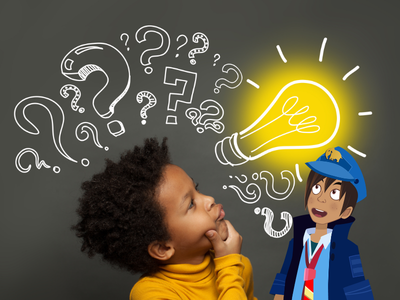
Writing is more than putting words on a page
Writing is often treated as a skill children need to master at school, with spelling, punctuation, and sentence structure taking centre stage. Of course, these things matter. They are the foundations of written communication.
But writing is also how children learn to develop and communicate their own ideas.
When a child tries to explain something, they're working out what they think. When they write a story, they're deciding what happens next. When they can't find the right word and try another, they're solving a problem. When they cross out a sentence and start again, they're learning that their first attempt doesn't have to be their final one.
Writing gives children somewhere to put their thoughts. More importantly, it gives them a reason to develop those thoughts in the first place.
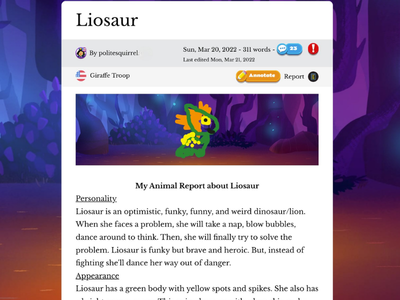
That's one of the reasons we created Night Zookeeper. We want to give kids reasons to write, experiment, and come up with ideas of their own. Over more than 15 years, we've watched children create creatures, characters and stories that we would never have thought of ourselves.
That's one of the most exciting things about working with children - they surprise you!
Writing must not become the new calculator
The calculator changed the way we approach arithmetic. We don't need to manually calculate every sum anymore, and for many everyday tasks, that's useful. But we still teach children math. We still want them to understand numbers, recognise patterns, and know how to reason through a problem.
We think that writing deserves that same distinction.
An AI chatbot can write a sentence in seconds. It can turn a few instructions into a polished paragraph or suggest a word when you're stuck. But there's a crucial difference between helping a child write and writing for them.
If a child asks AI for pointers on something they've already written, they're still involved in making decisions about their work. If they give AI a prompt to write the whole thing and simply accept the result, something important has been skipped - the thinking.
There are millions of ways to say the same thing. Choosing one is a decision about what you mean, how you want to sound, and what you want another person to understand. If we continually hand children the finished version, we take away some of those decisions. And those decisions are part of learning to write.
Don't skip the process
Children are naturally inventive. They make connections adults wouldn't make, take creative risks without worrying whether an idea is sensible, and invent words when the ones they know aren't quite enough.
So let's celebrate the made-up word, the sandwich that's also a villain, the rats on the moon planning an invasion (that one was mine, aged six, and I stand by it).
These ideas might not always make sense. That's precisely why they're interesting.
It's easy to judge writing by what ends up on the page. Is the spelling correct? Is the sentence structured well? Does the story make sense? But a finished piece of writing doesn't show everything that happened before it.
It doesn't show the child staring at the page trying to work out how to begin, the three different endings they considered, the word they couldn't remember, or the moment they decided to take the story in a completely different direction. Those moments may disappear from the final draft, but they're where children are making decisions, solving problems, and developing their ideas.
That's why the process deserves just as much attention as the result. The goal isn't to make every piece of writing perfect. It's to give children opportunities to become more confident, capable writers who can communicate what they actually think.
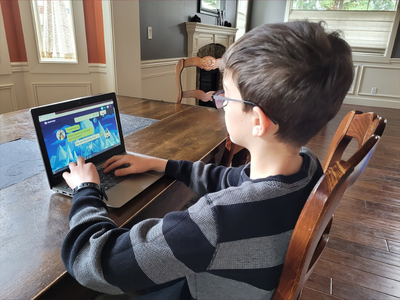
AI is a tool, not a replacement for thinking
AI is inevitably going to be part of children's lives, so learning how to use it thoughtfully will matter. It can provide guidance, explain difficult concepts, suggest possibilities, and help people explore information. We've already seen technology transform areas such as healthcare, research, and communication.
But there's a difference between using AI as a tool and using AI instead of thinking. A child might use AI to understand a difficult concept or explore a topic they're researching. But when it comes to their own writing, there should still be room for them to develop their ideas independently.
Let them search for the right word, write the sentence that sounds a little strange, change their mind, and make mistakes.
And before a parent or AI tool rushes in to fix something, ask, "What were you trying to say?". That question can tell you far more than whether the sentence was grammatically correct.
Celebrate progress, not just perfection
This also changes how we respond to children's writing.
Instead of immediately pointing out a spelling or grammatical error, ask about their thought process - "how did you think of that character?" or "what were you trying to say here?" That's something AI can't replace. A parent or teacher can understand the child behind the words and help them develop their thinking.
Of course, this doesn't mean ignoring the finished product. Good spelling, grammar, and structure still matter. But they shouldn't be the only things we notice.
Curiosity, persistence, experimentation and problem-solving matter too. When children know these things are valued, they have more freedom to take creative risks and explore an idea without worrying about getting everything right immediately.
Protect the messy middle
Writing isn't always easy. The blank page can feel daunting, the first idea can be chaotic, and a story can hit a dead end. You've probably heard of writer's block. Well, an AI chatbot can't get writer's block. So although it can be frustrating, it is uniquely human.
And perhaps that's worth protecting.
AI makes it tempting to remove every moment of uncertainty. Why wrestle with an opening paragraph when you can have one in seconds? But finding the right words and developing an idea takes time. If we are too focused on efficiency, we can miss the value of letting children work things out for themselves.
They need to be silly, imaginative, uncertain, and wrong. They need to experience the satisfaction of finally finding the right word and seeing an idea come together. Those experiences don't appear in a finished paragraph, but they are part of why writing matters.
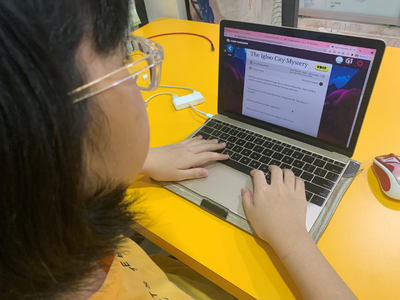
Let's not hand over the most important part...
We don't know exactly what AI will look like five, ten, or twenty years from now. But children will still need to communicate, make decisions, solve problems, and develop ideas of their own.
So let's use AI thoughtfully. Let's teach children to question it, challenge it and understand its limitations. And let's make room for the messy first draft, the crossed-out sentence, the ridiculous idea, and the story that takes three attempts to get right.
Let's not hand over the most important part:
The thinking.
And the next time your child comes up with a completely ridiculous idea, don't replace it with something more polished. Ask them to tell you more. That strange little idea might be where the good stuff starts!
----
Encourage creativity with Night Zookeeper!
Our online reading and writing program encourages creativity through interactive story-writing activities, imaginative writing prompts, character creation, drawing challenges, and so much more. Creativity is at the heart of everything we do, and we celebrate it with personalized tutor feedback that values the creative process just as much as the finished result.
From contests that encourage kids to let their imaginations run wild to learning adventures where they can create and collect fantastical creatures, Night Zookeeper gives children plenty of opportunities to express themselves, explore new ideas, celebrate each other’s work, and, most importantly, have fun while building their reading and writing skills!
You can try the program for FREE for 7 days here:
If you have any questions, email us at support@nightzookeeper.com or drop us a message on social media.


Make Reading & Writing Fantastically Fun!
- Award-winning reading & writing program for kids
- Improves spelling, grammar, punctuation & vocabulary
- Over 1,000 different learning games and activities


The Benefits of Technology in Education


Creativity Matters


Tips on How to Raise a Creative Child